
by Christa Rowland, IEL Regional Director
In May of 2018, the town of Pāhoa on the eastern slope of Kilauea was devastated by lava fountains and flows that decimated homes and brought this small, rural town on Hawaiʻi island to a screeching halt. Following a 6.9 magnitude earthquake, lava flows overran subdivisions and infrastructure, destroying 700 homes and leaving families reeling.
In April 2025, Jenn Masutani (Hawaiʻi Afterschool Alliance), James Hopkins (North Carolina Principal), and I visited Principal Kim Williamson at Pāhoa High & Intermediate School. He recalled the day of the eruption: “It was an intense day to be on campus.” Principal Kim, who was the Vice Principal at the time, told us that the school was closed for only one day, although eruptions continued for nearly 4 months.
Returning to some sense of normalcy was a journey for residents. Students returned to campus with trauma caused by the tragedy, and many were suddenly experiencing homelessness, but Principal Kim was committed to ensuring Pāhoa High & Intermediate was a safe place for students, where needs could be met. To do so, the school increased partnerships with community organizations that could deliver services, and staff incorporated more trauma-informed practices.
Recognizing that regular classrooms weren’t working for all students, Principal Kim and Tiffany Pratt (Vice Principal at that time) successfully secured funding for an alternative learning program centered on the importance of place. Working in partnership with Native Hawaiian elders, the school offered its most at-risk students the chance to work and learn alongside elders to restore a 200-year-old Hawaiian village.
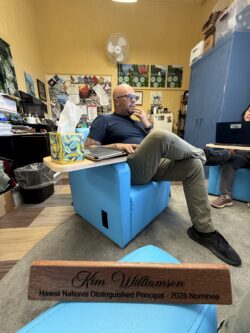
Principal Kim
Less than two years after the volcanic event, the COVID-19 pandemic began. As pandemic-related challenges impacted students, Pāhoa increased its commitment to being a safe place for students to get support. As the pandemic ebbed, Kim began moving from Vice Principal to Principal. At that time, Principal Kim recognized that the school’s efforts were mostly reactive. He wanted to focus more effort on prevention and began asking, “How do we get more involvement from the community?” While organizational partnerships had increased, engagement with community members had dwindled over time.
So, Kim asked the school staff, what do you want the school to be for the community? Staff agreed they wanted the school to be a harbor in a storm for the community. To get authentic input, the staff then took the conversation to the community. Over dinners and chats facilitated by teacher organizers, the community came up with an idea rooted in place, culture, and shared experience. They said the school should be like a kīpuka, or a protected space that lava flows around; a sheltered land that provides safety for animals and continues to restore life after a lava flow by seeding the land; a special place that embraces the past and seeds the future.
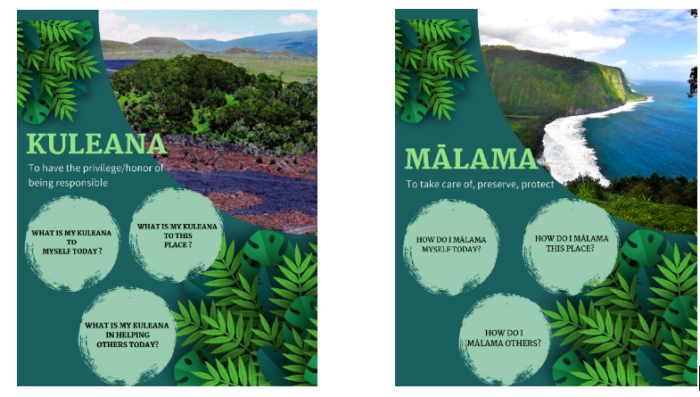
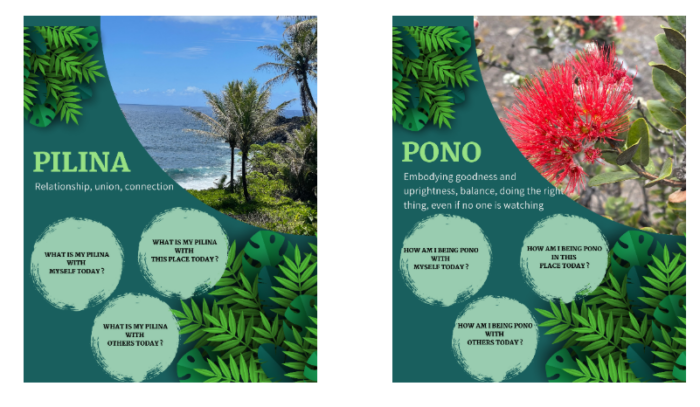
This beautiful analogy led the school to adopt four shared values, which are prominently displayed on posters around the school and centered in instruction and relational interactions:
Though previous wrap-around supports and intervention efforts had led to some early signs of improved outcomes, the school was still struggling and entered Comprehensive Support and Improvement More Rigorous Interventions (CSI-MRI) status in the fall of 2022. CSI-MRI status is a designation given to schools that have struggled for multiple years to increase academic outcomes. Luckily, the CSI-MRI designation meant the school could receive the resources needed to fully commit to becoming a Community School. In an effort to infuse CSI-MRI schools with community resources and engagement needed to improve student outcomes, the Hawaii Department of Education had committed to funding a full-time Community School Coordinator at each CSI-designated school, thereby ensuring CSI schools could maximize community support and engagement.
Principal Kim immediately identified his ideal Community School Coordinator and worked with his nonprofit lead agency partner to hire Leilani Luiz. Leilani had been filling other roles in the school, but her true talent was in her innate ability to build relational trust. Though Pāhoa had been on the path to developing into a Community School for years, Leilani’s support as a Community School Coordinator allowed community partnerships that were small, event-based, and often siloed to expand and become interwoven into the fabric of the school. Now, instead of sending families out of the building to find help, they can often find the resources and support they need right on campus. According to Kim, Leilani has become the bridge and day-to-day connector who makes the school community’s vision a reality.
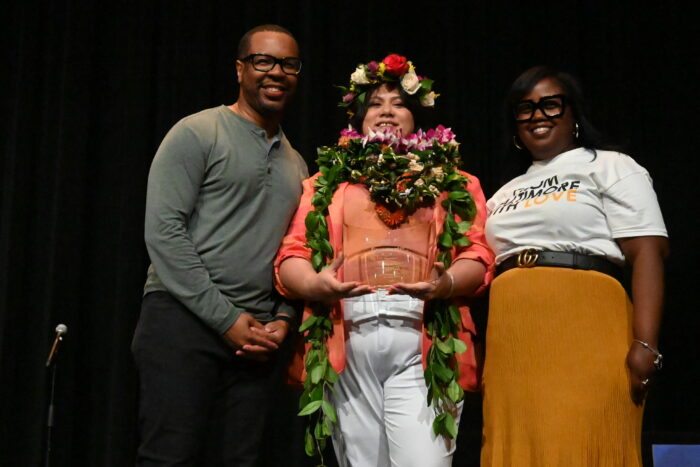
Community School Coordinator Leilani Luiz receiving the CSxFE Coordinator Award in 2025.
Being clear on the school’s Community School vision before officially becoming a Community School has enabled Leilani to set specific goals rooted in school values. Kim believes the Community School designation and the presence of a Community School Coordinator have helped Pāhoa be heard when they ask for community support. And it has allowed them to more intentionally recognize what help they want from the community, and to pause and align, recognizing that some partnerships might not be the right resources at the right time to meet the school’s most important goals.
Principal Kim shared, “If we put out good energy to the community, it comes back to the school.” Kim beamed with pride as he spoke about the Labor of Love event that occurred that previous Saturday. During the event, labor union members worked alongside students to beautify the campus by installing walkways, adding picnic tables, and completing other hands-on projects. Over 100 volunteers engaged in the workday, many of them alumni. And many have asked to keep coming back.
Kim was proud to share that six Pāhoa students have been accepted into electrician union apprenticeships, and a group of Pāhoa students just competed in a national welding competition. On the day we visited, Principal Kim was cleanly shaven, a departure from his usual long beard. In a much-anticipated event, Kim had allowed students to shave his beard after Seniors were awarded a combined $1,000,000 in college scholarships. This was the first time in 10 years of making this bargain with Pāhoa seniors that he had to follow through on his commitment to part with his beloved signature facial hair.
Kim believes the students of Pāhoa have a bright future ahead, and believes engaged alumni are a testament to what a good school and community can do. When the school takes care (mālama) of the community, goodness will return to the school. Centering relationships (Pilina) creates the connections that draw students and the community back to the school. When students honor their responsibility (Kuleana) to place and people, a thriving community develops. And if the school protects and cares for (Mālama) students, they will, in turn, care for their place and community. Just as the kīpuka protects the land from lava flows and helps seed new ground, Pāhoa High & Intermediate honors the past and seeds the future.